

Piedmont – Iconic interpretations: Gianduiotto and Bicerin
Gianduiotto = the Turin chocolate, a legend
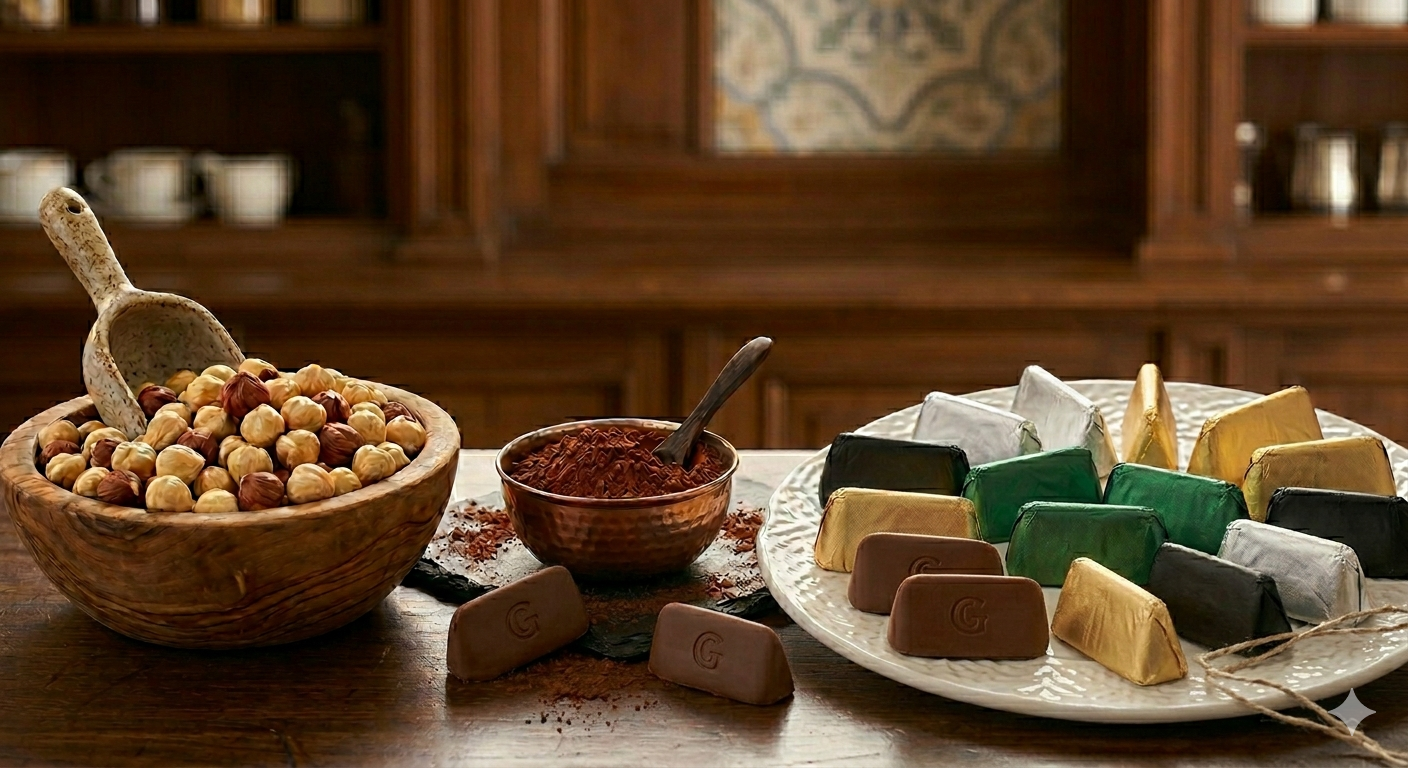
With its characteristic ingot shape, glossy and iridescent wrapper, and soft, hazelnut-rich filling that slowly melts on the tongue, leaving behind a pleasant hint of cocoa and nuts, it truly deserves its place in the pantheon of chocolates. It’s hard to resist a Gianduiotto: we’re willing to bet that you too, at least once, have succumbed to the temptation to hastily tear open the wrapper, deliberately ignoring the opening on the flat base of the bar. After all, this little delicacy from Turin has such a unique flavour that it tempts even those who say “I don’t eat chocolate, it’s not my thing”.
The iconography of the Turin chocolate
The Gianduiotto was first created in 1865: that was the year Caffarel began shaping his chocolates in the form of an upside-down boat, wrapped in golden aluminium foil. He had two intentions behind these seemingly random choices. The first was to imitate the wing of the tricorn hat worn by the famous Gianduja mask, the star of the Piedmontese Carnival. The second was to protect the soft paste of the “chocolate ingot” from heat, ensuring that it would keep for a long time under optimal conditions. It was an instant success: by the end of the 1960s, adults had already nicknamed it “givò” (“cigar butt”) and children began to associate it with the carnival character, who usually handed out sweets to the crowd during the parade.
Gianduiotto: modern variations
The Gianduiotto now comes in many different flavours: milk, dark, citrus-flavoured, and even filled with liqueur. The classic version, however, is made from Piedmont IGP hazelnuts, making up between 25 and 40% of the total weight (Gobino, for example, uses up to 39% in their Maximo version; Domori uses 29.5%; Caffarel uses 28%; Perugina uses 26%). In addition, the essential ingredients for ensuring that the gianduia chocolate has a melt-in-the-mouth texture include sugar, cocoa mass, whole milk (mostly in powder form, with the exception of some brands, such as Castagna,which have chosen to use only fresh ingredients) and cocoa butter. Depending on the recipe, some also add dried vanilla extract, a small percentage of almonds and some emulsifiers to improve the texture of the product, such as soy lecithin. How big are they? They come in all different sizes: from 10 grams for Caffarel to 7 grams for Giuinott® (the reinterpretation of the Gianduiotto by Guido Castagna, also recognisable by its slimmer shape), and down to 5 grams for Gobino Tourinot Maximo (which, in addition to its featherweight size, is characterised by the absence of milk and the intense flavour of hazelnuts and cocoa). But that’s not all: some have even launched a special line of mega-Gianduiotti for fans of the genre, ranging in weight from 250 grams to 2 kilos. Greed aside, it’s better to opt for the “pocket-size” versions, for a small and portable burst of pure sweetness.
The history is just as interesting, and we have summarised it here. Before you rush out to buy a pack, you can read the information below.
A brief history
The company was founded a few years after the Continental Blockade imposed by Napolean Bonaparte in November 1806, which aimed to prevent countries under French control from trading with British merchant ships. This was a real tragedy for Piedmont, which had been besieged by the general’s troops since 1798 and was severely disadvantaged by the interruption in imports of numerous raw materials from the British colonies, such as sugar, tobacco and… cocoa!
According to the most widely accepted theory, the Continental Blockade prompted Turin’s chocolatiers to replace most of the cocoa with hazelnuts from the Langhe region. But who deserves the credit for inventing the hazelnut paste? This question is almost impossible to answer definitively: there are no written documents attesting to the commercial production of gianduia chocolate during the early decades of the 19th century. However, we can safely assume that this confectionery recipe was developed by the Caffarel family, who produced the first chocolates made from a mixture of water, sugar, cocoa and vanilla. Later, the son Isidore went into business with the industrialist Michele Prochet, who had the brilliant idea of replacing cocoa with finely ground Tonda Gentile hazelnuts from the Langhe region. No sooner said than done: in 1852, the two entrepreneurs patented the new recipe, causing Caffarel-Prochet’s profit margins to skyrocket.
This was supposed to be a stopgap, but instead it became one of the most iconic chocolates in Italy (and the world!) thanks to its melt-in-the-mouth texture and the gentle aftertaste of the hazelnuts that were used in the recipe instead of cocoa.
Bicerin = a traditional Turin drink
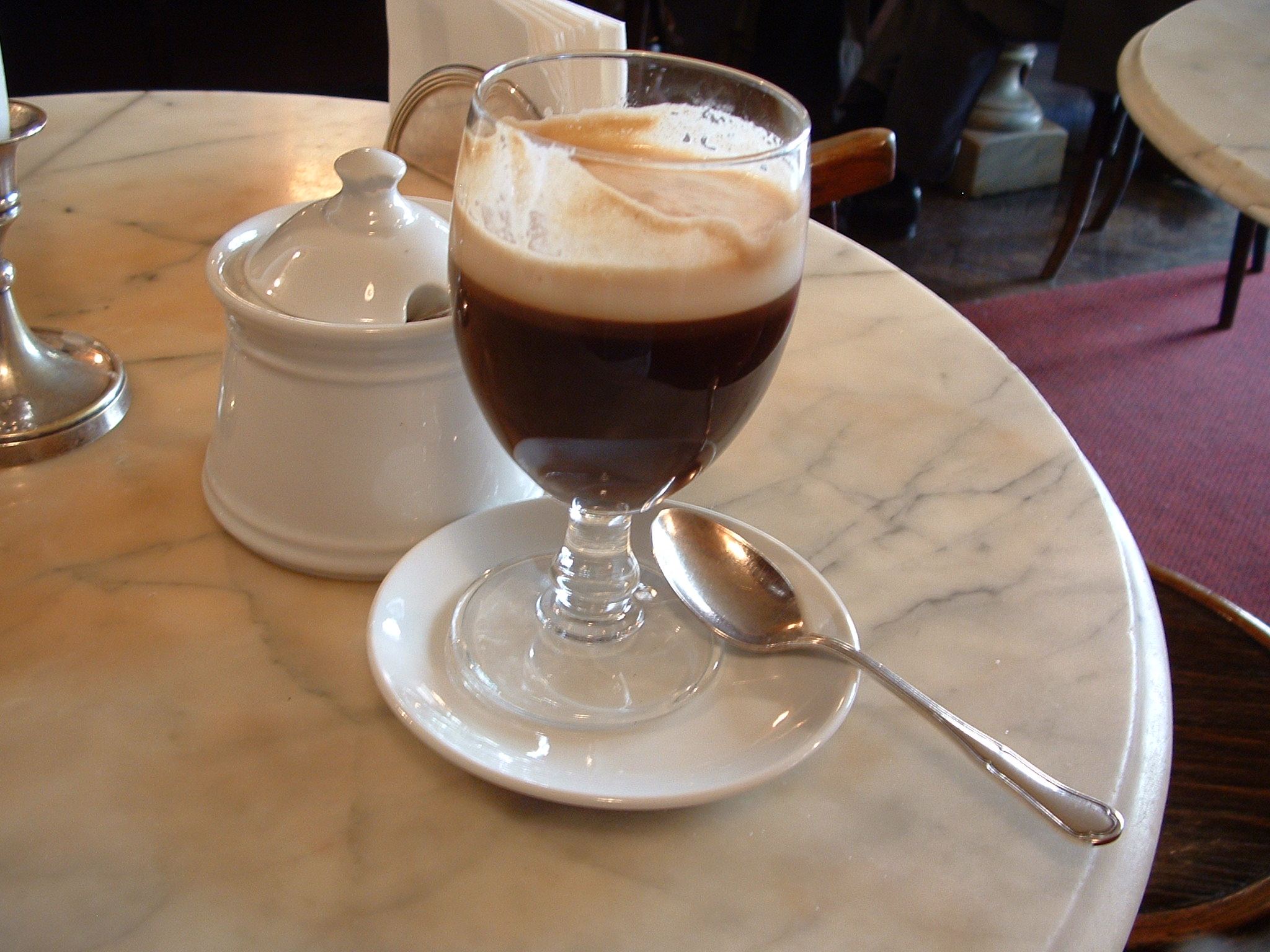
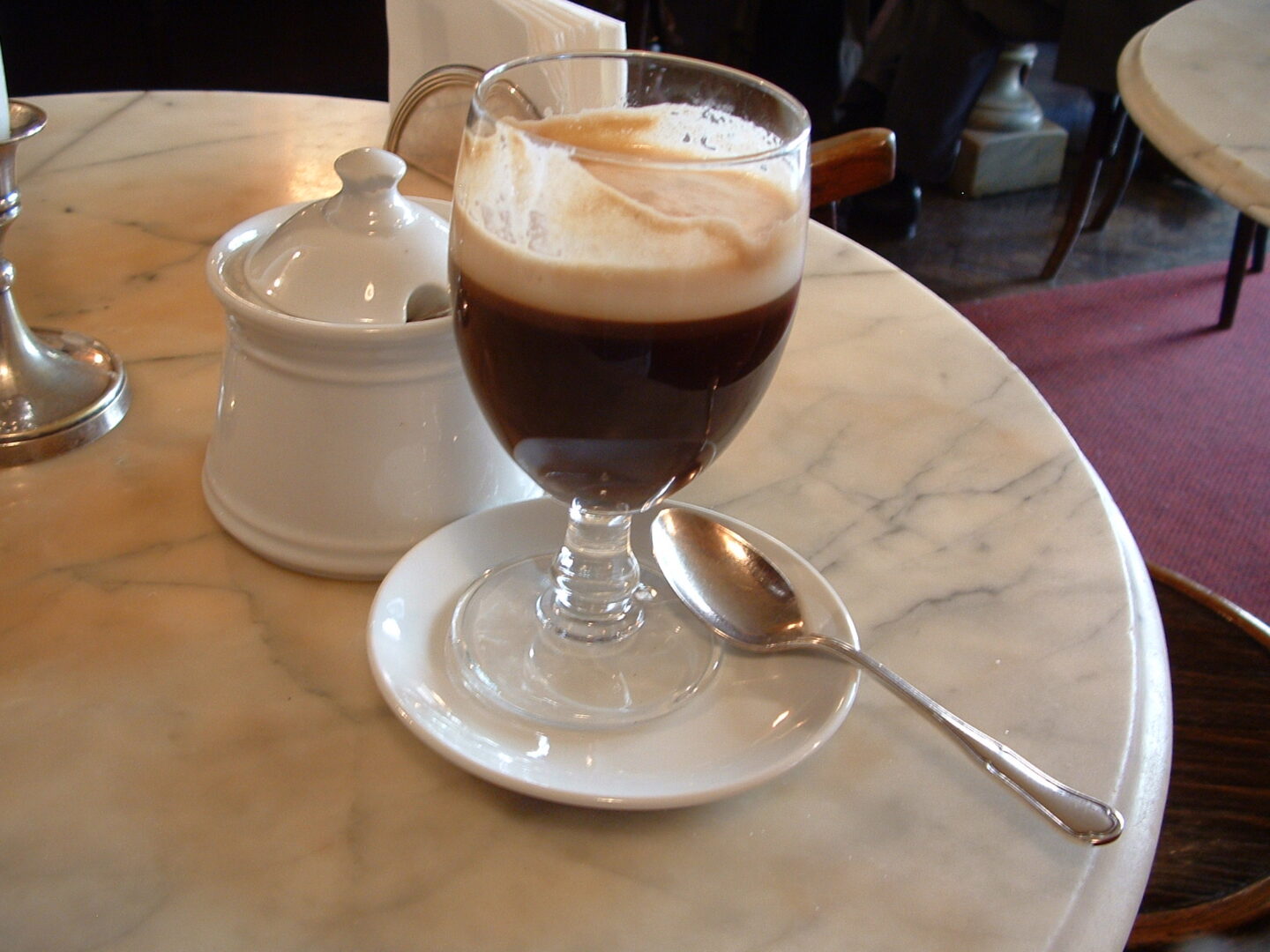
Ahot, non-alcoholic drink from Turin, made up of three main ingredients: coffee, hot dark chocolate and crema di latte (or fresh cream). Created in the 18th century and served in small glass cups (hence the Piedmontese name, which means “little glass”), it is served without mixing the layers, offering a contrast of flavours and temperatures.
This drink originated in the historic cafés of Turin in the 18th century, and is closely linked to Turin’s coffee culture. In particular, its origins are traced back to the Caffè Al Bicerin, a small establishment that opened in 1763 and remains one of the most iconic places to enjoy this drink today.
Bicerin is considered an evolution of the “bavareisa”, a drink made from coffee, chocolate, and milk that was served as early as the 17th century. However, the main difference between the two is in the way they are presented. In a Bicerin, the ingredients are not mixed, but served in separate layers, offering a unique visual and taste experience.
Tradition
Bicerin is not just a drink, but a true symbol of Piedmontese coffee tradition and culture. In Turin, many historic cafés continue to serve this delicacy according to the traditional recipe, allowing visitors to enjoy an authentic experience with a taste of the past.
This drink evokes a sense of warmth and hospitality, making it the perfect beverage for cold winter days, though it can also be enjoyed in every season of the year. This makes it the ideal companion for a relaxing break in the city, perhaps enjoyed with a traditional Piedmontese pastry.
Preparation
Making a Bicerin requires a great deal of care in the choice of ingredients and how they are arranged. Each layer contributes to creating a perfect balance between the sweetness of the chocolate, the intensity of the coffee, and the smoothness of the crema di latte.
Bicerin starts with a base of espresso coffee. The coffee should be strong and well extracted, so as to provide the perfect contrast to the sweetness of the chocolate. The second layer is made up of hot chocolate, preferably dark, to obtain a strong and intense flavour. The chocolate must be thick and rich, but not excessively sweet.
The last layer is a velvety crema di latte, which is gently poured over the surface. This cream creates a smooth feel on the palate and makes the Bicerin a truly indulgent treat.
The magic of this drink lies in serving these layers without mixing them, allowing the drinker to enjoy each flavour separately or to mix them as desired while enjoying the drink.
Passato e presente: il cioccolato in piccole dosi fa bene alla salute, produce energia, migliora l’umore, coccola e consola …
Giovanna